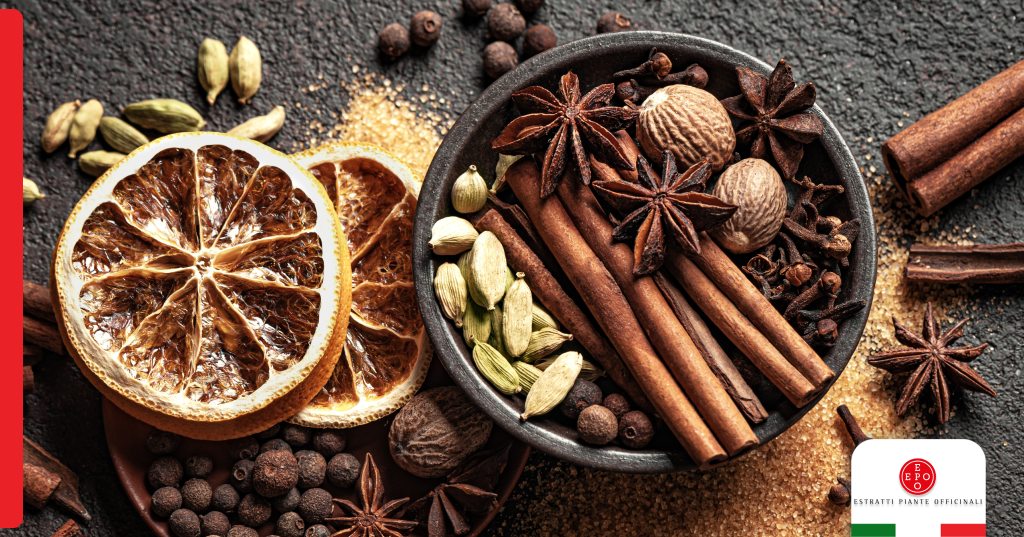
Winter aromas: spices and well-being during the cold season
Cold months represent a real challenge for our body's homeostasis. With falling temperatures and shorter days, the body is called to adjust thoroughly its physiological mechanisms: the immune system is put under greater strain, the metabolic rate must change to maintain a constant body temperature, and the digestive system has to cope with richer and heavier diets, typical of winter cuisine.
However, nature offers us valuable allies, such as the “warming spices”, which are typical of traditional Asian medicine (Ayurveda and TCM) and are also known in Western cultures. But what does science say about them? Are they really beneficial for our wellness?
The power of “warming spices”: beyond sensory warmth
The so-called warming spices (cinnamon, ginger, pepper, turmeric, star anise, cumin, cloves, among others) not only evoke a sensation of warmth due to their pungent aroma. Modern research has confirmed that certain bioactive compounds present in these plants (such as piperine in pepper and cinnamaldehyde in cinnamon) can increase thermogenesis, improve resistance to cold, and thus delay or prevent hypothermia (i.e. the emergency condition in which body temperature drops below 35°C, compromising vital functions).
The effect is mediated by the sympathetic nervous system and modulated by norepinephrine, a hormone and neurotransmitter that triggers the “fight or flight” response. This neurological reaction, typical of vertebrates as a form of adaptation to any stressful stimulus, increases energy expenditure and promotes the production of endogenous heat, necessary to react to the alarm, with the involvement of brown adipose tissue, until a state of homeostasis is restored.
An Ayurvedic winter: getting ready for spring
According to Ayurveda, the medical system of India for 5,000 years, health is a matter of correct balance; winter is the season when the earth's energy is withdrawn, before the explosion of vitality typical of spring. It is therefore a season of rest, detachment from passions, and preparation for spring rebirth.
Winter, however, promotes the accumulation of kapha, one of the three fundamental functional principles (doshas), made of two elements, earth and water, that are similar to the qualities of this season: cold, wet, and heavy. Reducing this accumulation through daily practices that promote inner calm and a proper diet, which avoids excessive weight and stimulates digestion, allows us to stay one step ahead before the changing season, arriving in Spring with the best possible condition and thus preventing colds and allergies.
In winter nutrition, spices, used as flavorings in both food and hot drinks, play an essential role, as they have digestive and warming properties: they increase agni, the digestive fire that transforms food into energy, supports the body's natural defenses, and presides over mental clarity.
All spices also have antimicrobial properties, which is why they are widely used in the cuisines of warm climates, as they did and still help to preserve food in the absence of refrigeration and preservatives.
From a kitchen ingredient to a standardized extract
However, when talking about spices, it is essential to make a clear distinction between a spice used as a food ingredient and a botanical extract. Although the scent of a spice can already evoke a sense of well-being, its health benefits depend mainly on the concentration and consistency of its active ingredients, such as those found in EPO's high-quality plant extracts.
It is also important to distinguish between essential oil and extract: essential oil, which is obtained by distillation, represents the volatile fraction of the plant, while plant extract (dry or fluid), obtained by an extraction process other than distillation, also preserves other fractions of the phytocomplex. Thanks to standardization, EPO also guarantees a standardized and certified presence of key molecules—such as polyphenols in cinnamon or gingerols in ginger—ensuring a more consistent and reliable biological action, not subject to the natural variability of the raw material.
Let's take a closer look at how extracts from the main winter spices can support the various functions of our body.
Cinnamon (Cinnamomum verum J. Presl.): protection and metabolism
In addition to its unmistakable aroma, due to cinnamaldehyde, cinnamon bark is a rich source of polyphenols. In winter, cinnamon extract is valuable for its ability to support carbohydrate metabolism, helping the body manage the glycemic spikes associated with higher-calorie diets. According to Ayurveda, cinnamon is one of the most important digestive herbs; it also stimulates all bodily fluids, thus helping to eliminate phlegm and having a beneficial effect on circulation.
A recent study has shown that the antioxidant and anti-inflammatory properties of cinnamon extract are maintained after simulated in vitro simulated digestion, suggesting that foods supplemented with this extract may retain the spice’s bioactive properties, even following the digestive process.
However, it is important to pay attention to the correct botanical species: EPO extract comes exclusively from Ceylon cinnamon, which, in addition to being more aromatic, does not contain coumarins, natural substances that can present health risks and are found in Chinese cinnamon. This is guaranteed by molecular certification or DNA barcoding, a technique pioneered by EPO in Europe and now commonly used for the identification of medicinal and aromatic plants.
Ginger (Zingiber officinale Roscoe): defense and vitality
Ginger rhizome is universally known for its warming properties; during winter, ginger acts on several critical fronts: it modulates gastrointestinal motility, promoting digestion, regulates cardiovascular function, and supports joint function.
Ginger is also a plant of paramount importance in Ayurveda: in addition to promoting digestion, respiration, and circulation, it helps eliminate toxins and also has a rejuvenating and regenerative (rasayana) action.
Recent scientific evidence highlights how the bioactive compounds in ginger, namely gingerols and shogaols, are able to inhibit inflammatory mediators, blocking the arachidonic acid cascade and offering relief in various inflammatory (such as arthritis) and autoimmune conditions.
Star anise (Illicium verum Hook. f.): respiratory well-being
Star anise is a plant widely used in the East and has a characteristic scent, due to the presence of anethole, also found in aniseed. The fruit (which has a typical star shape) also contains shikimic acid, a primary precursor for obtaining, through chemical synthesis, a well-known anti-flu drug.
In addition to its well-known digestive and carminative properties, star anise promotes the fluidity of bronchial secretions and the well-being of the nose and throat, with a balsamic and soothing action on the oropharyngeal mucosa. A recent review has confirmed many traditional uses.
Proper breathing is a fundamental prerequisite for all mindfulness practices, which allow you to restore mental and physical balance, particularly useful in winter.
Towards a winter of conscious well-being
Scientific research on botanicals now allows us to look at tradition with new eyes. Choosing a high-quality extract means going beyond simple aroma. Would you like to learn more about the technical characteristics and numerous applications of our ingredients for your formulations?
We invite you to discover the complete range of high-quality extracts from EPO Srl, where nature meets rigorous scientific research:
Discover our products and our certified extracts.