Sea buckthorn: a valuable aid from nature for gut regularity
The gut is our second brain: it has more than 100 million neurons and its functionality is closely related to stress and immunity. At least one third of gastrointestinal disorders are classified as "functional disorders": this means that they have no organic cause or are not secondary to a pre-existing pathology. Nevertheless, they have a very negative impact on the quality of life of those who suffer from them, with symptoms such as abdominal pain, bloating, a sense of satiety, nausea, vomiting, diarrhea or constipation. Food supplements are now recognized as a possible alternative to counteract these disorders, but, among botanicals, laxatives containing anthraquinones (aloe, rhubarb, senna, cascara and frangula) are likely to disappear from the market in the European Union as EFSA, the European Food Safety Authority, has raised safety concerns.
In this article, we will discover a European shrub, the sea buckthorn, whose berries claim a long traditional use in gut regulation: used as purgatives since the sixteenth century, a clinical study, recently published, has proven its beneficial properties in chronic idiopathic constipation.
The role of lifestyle in constipation
Chronic constipation is defined as a condition characterized by incomplete and/or infrequent evacuation (fewer than 3 times a week). This disorder affects 9 to 20% of the global population, with prevalence in women and the elderly. Scientific research has highlighted that constipation is related to stress, changes in the intestinal microbiota (dysbiosis), sedentary lifestyle and poor eating habits. Those in turn include poor hydration, low-fiber diets (whole grains, vegetables and fruits), but also irregular meal schedules. Therefore, the first approach to treat constipation should be to improve one's lifestyle, resorting to remedies to regularize intestinal transit only secondarily. Finally, a correct toilet routine should be part of one's daily habits.
Plants to improve bowel movements
Preparations of plant origin that facilitate intestinal transit constitute a very wide category of plants and their derivatives, with different mechanisms of action.
Vegetable fibers are normally the first intervention in constipation; while insoluble fibers found in cereals (bran), undigestible and non-fermentable, increase fecal mass and improve transit, soluble fibers, such as gums, pectins, mucilage (the latter contained in psyllium, but also in marshmallow and mallow), ferment in the colon increasing fecal mass; moreover, their fermentation produces short-chain fatty acids (SCFAs), an essential source of energy for colon cells with prokinetic action, i.e. an increase in intestinal motility.
Used mainly in pediatrics, the so-called "osmotic laxatives", such as manna or tamarind, contain substances that cannot be absorbed by the intestine, attracting water into the gut lumen and activating peristalsis.
Sweet almond oil and olive oil have a lubricating and softening action on the fecal mass.
Anthraquinone supplements, on the other hand, primarily act through an irritating effect on the colon mucosa, activating local reflexes that in turn stimulate intestinal motility. Because of their strong action, they are intended for short-term use. In addition, anthraquinones, isolated from their matrix, have been proven to be potentially carcinogenic and genotoxic (i.e., capable of causing damage to cellular DNA) in some studies, which is why EFSA put them under observation.
A new natural approach: sea buckthorn
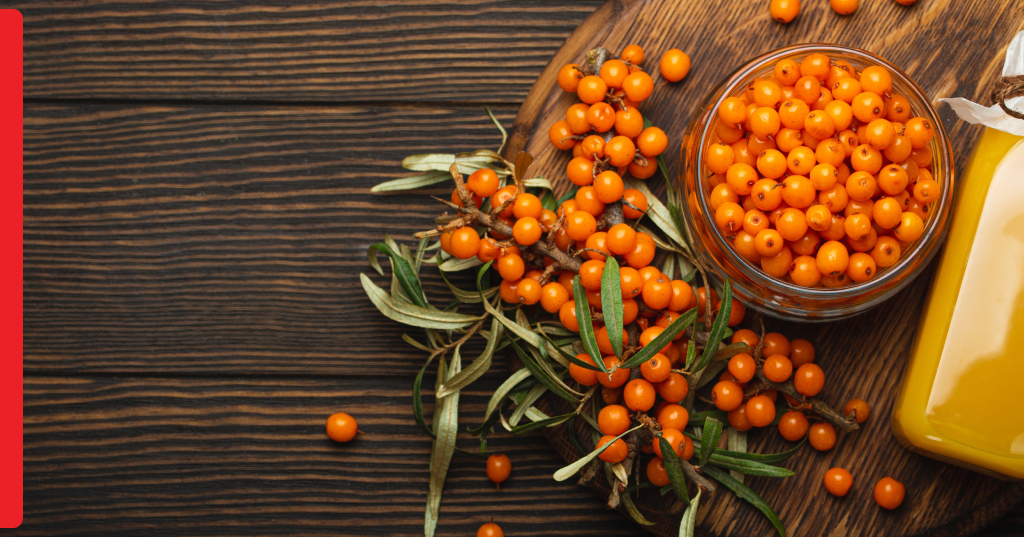
Sea buckthorn (Hippophae rhamnoides L., fam. Elaeagnaceae), native to Eurasia, is a hardy shrub that tolerates intense cold and saline soils. Its fruits, similar to small orange olives in abundant clusters, contain a very rich and diverse phytocomplex, including polyphenols (flavonoids, phenolic acids, proanthocyanidins), carotenoids, and triterpenoids; the berries also contain vitamin C and mannitol. In the polyphenolic fraction, isorhamnetin derivatives predominate.
Beyond the traditional use known for centuries, the laxative and prokinetic effects of sea buckthorn have been demonstrated in an animal model study and ascribed to a partial activation of muscarinic receptors of the parasympathetic system, meaning a stimulating action on gut smooth muscle. The parasympathetic system, a part of the autonomic system (i.e., independent of our will), promotes rest, digestion, and energy recovery ("rest & digest"). It is known that isorhamnetin derivatives, a flavonoid very abundant in the fruit, exert an inhibitory action on acetylcholinesterase, the enzyme that degrades acetylcholine (Ach), the neurotransmitter of the parasympathetic system, causing Ach concentration in the synapses with a stimulatory action of peristalsis; however, the presence in the sea buckthorn phytocomplex of inhibitory components may provide a balanced effect, reducing the typical adverse effects of parasympathomimetic drugs, such as abdominal cramps.
In another study, our sea buckthorn extract (Olivellax®) was able to upregulate aquaporin 3 (AQP-3) expression, a transmembrane protein that regulates water transport into the colon, with a mechanism of action similar to that of osmotic laxatives.
In the same study, Olivellax® was shown to help restore short-chain fatty acid (SCFAs) levels in fermented fecal samples from constipated subjects, whose SCFAs levels are normally lower than in healthy subjects. It is known that an alteration in the intestinal microbiota contributes to the onset of functional constipation; as we have already seen, SCFAs play an important role in gut function, as they act on smooth muscle, increasing its motility.
Finally, a monocentric, randomized, double-blind, placebo-controlled clinical trial demonstrated the laxative effect of Olivellax®: at a dose of 500 mg/day it improved the number of weekly spontaneous complete bowel movements (SCBMs) by more than 40%, normalizing stool consistency, measured according to the Bristol Scale (BSFS), and other typical disorders related to constipation, such as bloating, abdominal pain and heaviness.
To learn more about the action of sea buckthorn, discover Olivellax®, our high-quality dry powdered extract, standardized in isorhamnetin.