Spring festivals, the rebirth of nature, and the role of botanicals
If we were to place a pin on a world map for every “spring festival”—ancient and modern, religious and pagan, Nordic and tropical—the result would be surprising: there is no corner of the planet, no culture, no tradition that does not celebrate the return of spring. And even more surprising is how much these rituals have in common, despite having originated in different civilizations and eras.
Spring is that time of year when the desire for rebirth emerges, and it is celebrated in all human cultures, from the Indus Valley to the banks of the Rhine, with rituals, bonfires, colors, and feasts.
It is the season when Persephone comes back from Hades to embrace her mother Demeter once more, the moment when, according to the Book of Changes (I Ching), thunder—represented by the trigram Zhen — awakens the dormant earth, and, in the words of T.S. Eliot, it is “the cruelest month” — not because of its harshness, but because it shakes us from the protective numbness of the cold season with the impetuosity of a new beginning.
Nowruz: nature’s New Year
One of the oldest festivals is Nowruz, the “new day” in Persian. Rooted in Zoroastrianism and celebrated at the spring equinox, it is listed on the UNESCO Intangible Cultural Heritage of Humanity; it is observed by over 300 million people in Iran, Central Asia, the Balkans, and diaspora communities around the world.
At the heart of Nowruz is the haft-seen: a ceremonial table on which seven objects are arranged, each of whose Persian name begins with the letter “s.” Among these, the sabzeh — sprouted lentils or wheat grains — takes pride of place. This is no coincidence: the sprout is the most direct and biologically accurate metaphor for what happens in spring: the vital energy, compressed within a seed, unfolds.
Holi: the festival of colors
In India and Nepal, Holi, the Festival of Colors, is celebrated during the full moon of the month of Phalguna (February–March). Ancient origins — the earliest written records date back to the Vedic texts — blend with an explosive, contemporary vitality: millions of people throw colored powder at each other, light ritual fires, dance, and eat sweets. The meaning, as handed down by certain Hindu legends, is the triumph of good over evil, of light over darkness, and of life over winter idleness.
Songkran: the water that renews
In Thailand, around mid-April, Songkran, the Thai New Year, is celebrated. The word derives from Sanskrit and means “astrological transition.” Tradition dictates pouring water over Buddha statues to purify them—but the practice has evolved into the most famous “mass bath” on the planet, where entire cities transform into a giant water fight. Water as a purifying and renewing element: the same symbolism we find in Christian baptism, Islamic ablutions, and the Jewish ritual bath.
Hanami: the beauty of the fleeting
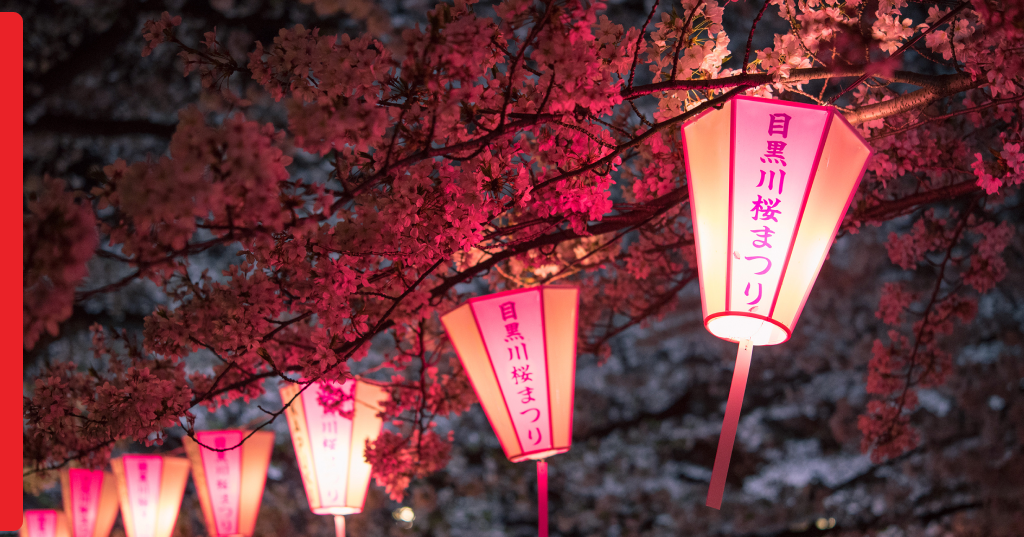
Japanese culture has developed what is perhaps the most poetic celebration of spring arrival: Hanami, the “viewing of cherry blossoms,” a contemplative practice dating back to the 8th century, when the imperial aristocracy would gather under the sakura trees to compose waka (poems). The cherry blossom is as beautiful as it is fleeting, just like human life: according to Zen Buddhism, meditating on impermanence is said to make one wiser.
Walpurgisnacht: bonfires across Europe
Continental Europe has developed an ancient ritual to celebrate the end of winter. In Germany, Sweden, and Austria, April 30 is Walpurgisnacht, the night of Saint Walpurga, an 8th-century Bavarian abbess; it is actually the Christianization of a pagan rite to celebrate the arrival of spring: bonfires, dancing around the maypole, and the symbolic hunt for witches who carry away the cold season.
A common thread: fire, water, life
What is the common thread among spring festivals? They all celebrate the same cyclical transition from winter to spring, the force of blossoming life, and the desire for purification before rebirth. The human body, like a plant, has gone through a period of metabolic slowdown, but with spring, the systems reactivate. Fire burns the old away; water purifies; ritual foods — sprouts, seeds, eggs — symbolize the power of nature, encapsulated in a promise of life and ready to burst forth.
Plant extracts for springtime well-being
Chronobiology has shown that human metabolism is also influenced by seasonal cycles; in a previous article, we discussed how changes in the ratio between daylight-darkness hours can alter the balance of the circadian rhythm and, consequently, the sleep-wake cycle. Furthermore, in winter, metabolic waste tends to accumulate due to a diet possibly richer in fats and animal proteins, a reduction in physical activity, and a slowing of liver and lymphatic function.
Various traditional medical systems, including holistic Eastern medicine, agree on a fundamental principle: in spring, the body needs to purify and regenerate itself to regain the balance between opposite forces, lost during the winter.
Artichoke (Cynara scolymus L.): the ultimate liver support
Artichoke has been used for centuries in Mediterranean herbal traditions as a liver and digestive cleanser. Its main active components, caffeoylquinic acids, stimulate bile production and flow (choleretic and cholagogue action), facilitating fat digestion and liver cleansing.
The increase in bile acid production and the excretion of free cholesterol by our dry artichoke extract, an ingredient in the Omeolipid® blend, has been demonstrated in a preclinical study, thus confirming its traditional use for improving liver function.
Birch (Betula pendula Roth.), the queen of drainage
The birch is perhaps the most iconic tree of the Nordic spring: the white of its bark and the delicate green of the young leaves sprouting in spring are the colors that mark the beginning of the season throughout northern and central Europe. Birch leaves are widely recognized in traditional medicine as diuretic and purifying, useful for promoting urine flow, in cases of urinary tract infections and kidney stones; they also relieve rheumatism and gout.
Ribes nigrum L.: the adaptogen buds
Ribes nigrum L. is one of the most versatile plants in the European repertoire of gemmotherapy and phytotherapy. Black currant bud extract is considered a true natural adaptogen and anti-allergic agent, as it stimulates the adrenal cortex to produce cortisol; it is therefore particularly useful in the spring to fight seasonal fatigue, spring allergies (rhinitis, dermatitis, conjunctivitis, sinusitis, asthma, etc.), and recurrent inflammatory syndromes.
Rosa canina L. and joint health
Rosa canina L. fruits, the rosehips, are among the fruits with the highest vitamin C content: up to 40 times the quantity found in citrus fruits per 100 g. However, it would be an oversimplification to limit the biological profile of the rosehip to vitamin C alone.
In fact, rosehip contains an extraordinary polyphenolic complex: phenolic acids, tannins, flavonoids, organic acids, carotenoids, vitamins, and galactolipids, with anti-inflammatory and antioxidant properties. Rosehip is also traditionally used to alleviate the symptoms of osteoarticular disorders, which often worsen during the winter season; unpublished data have scientifically demonstrated the anti-inflammatory action of our rosehip dry extract.
Thymus vulgaris L.: the respiratory system also needs to be cleansed
Ayurvedic medicine places great emphasis on the use of expectorants in springtime: during the cold season, the respiratory tract undergoes significant stress because of low temperatures and colds, leading to an accumulation of phlegm. Expectorant plants help remove this buildup. Common thyme has a long history of traditional use as an antibacterial and antioxidant, but above all as an expectorant, as demonstrated in a preclinical study on Thymox-EPO®.
Awareness and balance in spring
Throughout history, people have welcomed the arrival of spring as a time of renewal for body, mind, and spirit. Moreover, traditional herbal medicine provides, on an increasingly solid scientific ground, valuable support for our balance and well-being.
EPO offers only high-quality botanical ingredients — standardized extracts and bud extracts — produced with thorough respect for herbal materials, from verified and certified supply chains, with the same care and attention with which nature presides, year after year, over the return of light and the warm season.
To find out more about all Made in EPO extracts, visit the dedicated section of our website.